
Auto Loans
Capital One Auto Navigator lets you check terms before the dealership
Capital One Auto Navigator lets you explore a car and a financing estimate on the same screen. The benefit is knowing what a vehicle might cost before you arrive. The limitation is that the terms on screen depend on the vehicle, dealer and details used when you prequalify. Take a written comparison to the dealership if you want that estimate to stay useful.
What prequalification actually does
Capital One's Auto Navigator prequalification page, reviewed November 25, 2026, says shoppers can check whether they prequalify without impact to their credit score, then browse vehicles from participating dealers. The preliminary terms are subject to the completed application and credit approval. Capital One's program disclosures explain reasons the terms can change, including a different vehicle, different financing provider, a change in credit information or details supplied later at the dealership.
Check the dealer and vehicle before relying on the estimate. Capital One's Auto Navigator FAQ says an Auto Navigator prequalification cannot be used for a purchase at a dealer outside the network or from a private seller. It also says a Capital One prequalification expires after 30 days from receipt of the request. A listing can sell while you are deciding. Confirm that the specific vehicle remains available and that the dealer will handle the financing before traveling.
Capture the terms for the exact vehicle
| Detail | How to use it |
|---|---|
| Vehicle identification number, trim and quoted price | Check that the dealer paperwork covers the same vehicle. |
| Dealer and financing provider | Verify participation and check that the finance paperwork names the lender you expect. |
| Down payment, trade allowance and payoff | Check each line separately. An estimate of your trade's value is not a payoff quote. |
| APR, term and financed amount | Reconcile the final loan with the amount originally entered. |
| Expiration date and conditions | Know when you need a new estimate and what changes may require an updated quote. |
Get an itemized out-the-door price from the dealer. The list price and monthly estimate may not include the same taxes, registration fees, dealer charges or optional products. Ask for a clean version without optional products. The CFPB's auto shopping guide recommends researching costs and comparing financing before committing to a vehicle.
Make the dealer show what changed
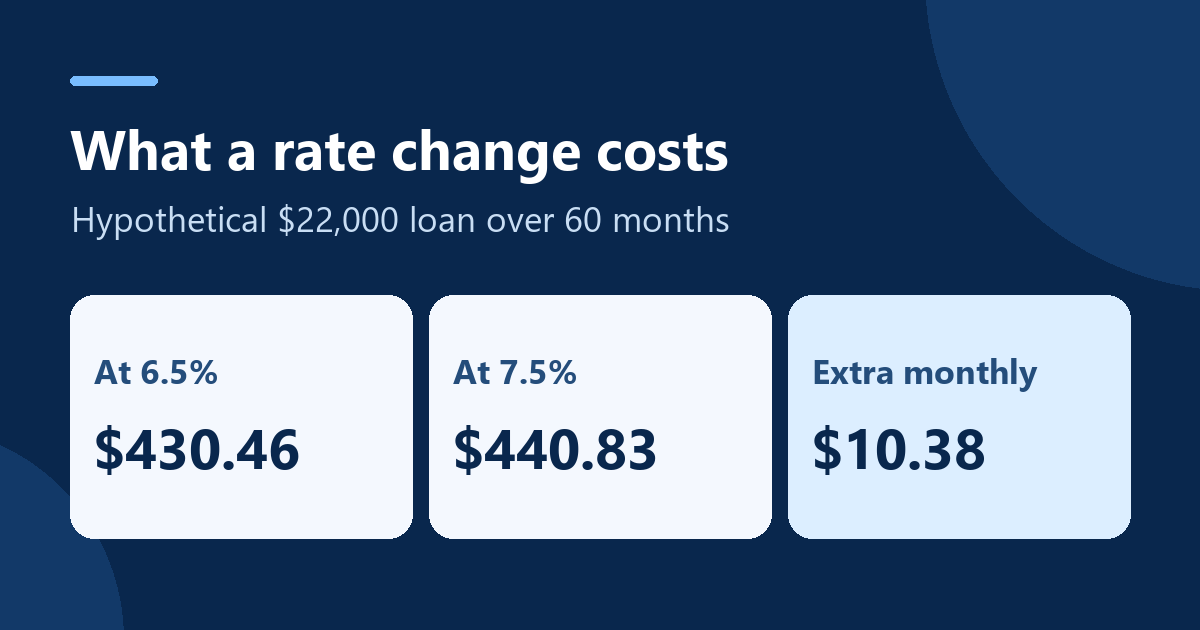
Assume you compare two hypothetical quotes for $22,000 over 60 months, with fixed monthly amortization and no fees. At 6.5% annual interest, the payment is $430.46 and total payments are $25,827.32. At 7.5%, the payment is $440.83 and total payments are $26,450.09. Using unrounded payments, the difference is about $10.38 a month or $622.78 over the term. The two rates are hypothetical. Keeping the loan amount and term the same isolates what the rate change costs.
Check the opposite case as well: the interest rate stays near the online estimate, yet the financed balance grows. A $1,000 increase at 6.5% over 60 months adds about $19.57 a month and $1,173.97 in total payments, all else equal. The dealer might have changed the sale price, added a product, included taxes missing from the online estimate or revised a trade allowance. Ask which line changed and why. An itemized buyer's order makes it easier to determine whether the amount is a necessary cost or something you can decline.
A dealer can offer a similar monthly payment with a longer term or more money down. It may also quote a different amount because it included a product or changed the trade-in allowance. Ask for the comparison again using the same term and the same amount financed. A different car may legitimately change eligibility, but the revised quote should explain which inputs changed. See our guide to comparing terms before accepting a payment that looks close to your estimate.
Ask before authorizing the next credit check
The initial Auto Navigator check is distinct from the application at the dealership. Ask whether the next step will involve a hard inquiry, how many lenders may receive the application and whether you can opt to use a financing offer you already have. The CFPB explains why related auto loan inquiries made close together are often grouped by scoring models. The window varies, so do not assume every credit inquiry will be counted the same way.
Give any competing bank or credit union the same vehicle price, principal and term. Ask whether its offer depends on mileage, model year, dealer participation or a loan-to-value limit. Bring both sets of written terms and compare final disclosures before paying a deposit. If the dealer substitutes a different lender, verify the name, payment instructions, first installment date and any conditions on delivery. A similar payment can hide a longer term or a different financed balance.
Once you have a final offer, compare its Truth-in-Lending disclosure with the online estimate and any outside financing quote. The marketplace is useful when it helps you catch a change and decide whether it is worth accepting. Keep the itemized price and final paperwork so you can see exactly what was financed after the shopping screen is gone.