
Personal Loans
Discover personal loans and the cost of consolidating debt
A consolidation loan can turn several due dates into one. Whether it actually makes the debt cheaper depends on the rate, the length of the loan and what happens to the credit cards you pay off. Discover's funding options can also make a practical difference if one of your balances is with Discover or Capital One.
Start with the loan and payment restrictions
On November 25, 2026, Discover's personal loan page listed fixed-rate personal loans from $2,500 to $40,000 and described checking rates without an impact to your credit score. Read the terms in your actual offer to confirm whether the amount, APR and length fit your situation. Discover advertises no origination fee for this product, but paying late can still result in a fee under the agreement.
Discover offers to pay many creditors directly for a consolidation loan. Its website excludes direct payments to Capital One accounts, including Discover and Capital One credit cards, and lists restrictions involving secured loans and post-secondary education. Before borrowing, check both whether the intended use is allowed and how each permitted payment can be sent. Do not assume that every balance can be paid through the lender's direct-pay process. Keep a current list of accounts, due dates and payoff amounts as you compare options.
Run the payoff at the same term first
| Repayment model | Monthly payment | Total interest |
|---|---|---|
| 22% over 36 months | $458.29 | $4,498.28 |
| 12% over 36 months | $398.57 | $2,348.58 |
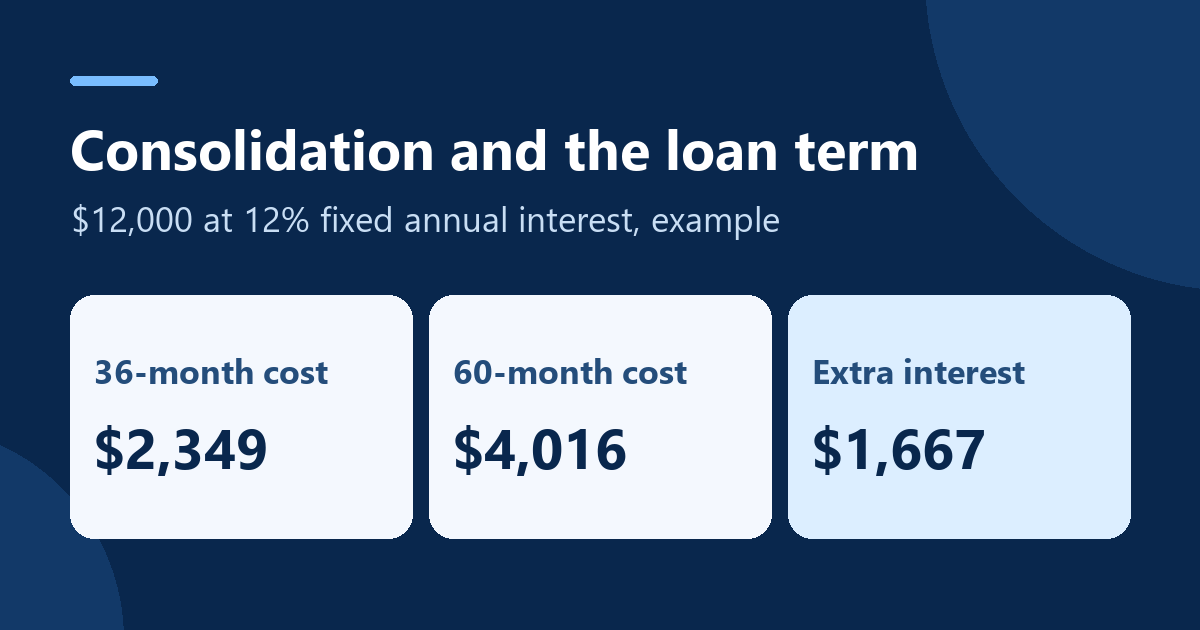
| 12% over 60 months | $266.93 | $4,016.00 |
These examples assume fixed monthly amortization, no fees and no new debt. They are not Discover's terms. The 22% model approximates what repaying a higher-rate balance on a fixed schedule might look like. Credit cards commonly accrue interest daily and their actual charges and minimums can differ. At the same 36-month term, the hypothetical 12% loan saves $2,149.70 in interest. Stretching that lower rate to 60 months brings the payment down about $132 from the 36-month loan but gives back about $1,667.42 of the interest savings.
The CFPB's consolidation guidance recommends comparing the entire cost, since a lower payment can result from a longer term. Use our fixed-rate calculator for the new loan and compare that with a plan to pay the old debts directly. If a different lender charges an origination fee, include it in the comparison and confirm that the funds remaining after the fee will cover your balances.
Make the transfer of debt orderly
- List each creditor, payoff amount, APR and next deadline. If interest is accruing, confirm how long the payoff quote is valid.
- Verify the lender is allowed to pay each creditor directly or confirm how you will make payment yourself.
- Continue required payments until each creditor confirms receipt. Check the next statements for residual interest or fees.
- Make a plan for the cards you have paid off. If you continue using them, reserve money for new purchases so you do not rebuild balances while repaying the consolidation loan.
A lender may fund less than the amount you requested. If the new loan only covers some debts, decide which accounts to eliminate based on cost and any restrictions. A partial plan can still save money, but budget for both the new installment and remaining minimum payments. Also confirm which date the new payment is due. A first payment close to the old accounts' due dates can create a temporary cash squeeze.
Check whether the funding plan covers the right debts
For example, suppose you owe $7,500 across two cards and $4,500 on a third account. If an approved loan only delivers $9,000, make a written plan for the remaining $3,000 before accepting it. Start by checking which accounts can receive a direct payment, which carry the highest rate, and whether any promotional terms are close to expiring. A $9,000 loan can improve the picture but leaves a second payment obligation if the debts total $12,000. Budget for the new loan and the balance you will continue to carry.
Read the payment terms if a lender offers direct payment and a separate bank deposit for any excess. Confirm the lender will send the right amount to the right account and whether you will need to finish the payoff yourself. If a creditor returns a payment or posts it after the next statement closes, reconcile the resulting balance before assuming the debt is clear. Keep receipts for each payoff so you can resolve a difference without relying solely on what the consolidation account shows.
When comparing lenders, use the same amount of usable proceeds. A loan with a fee deducted up front can leave less for payoffs even when the principal shown is identical. See how origination fees change the cash you receive. A fee-free offer still needs a competitive rate and term. Estimate the cost under the shortest term you can make consistently and compare it with a payment that leaves enough for normal expenses.
Compare consolidation with the other realistic options
If you can clear the balances quickly, paying them directly avoids a new application and any loan fee. If your debt fits a genuinely usable 0% window, a balance transfer could cost less, but you need to calculate the fee and plan for the expiration date. If you are unlikely to keep up even with the proposed lower payment, ask existing creditors about hardship options or consult a reputable credit counselor. A longer loan can defer a problem without making the budget work.
Set the comparison up before asking for a rate. A consolidation loan improves the situation when the disclosed payment fits and the total cost is materially lower under a realistic payoff plan. Keep a copy of the signed offer and a checklist of every account that still needs to show a zero balance. That is the point at which several debts truly become one.